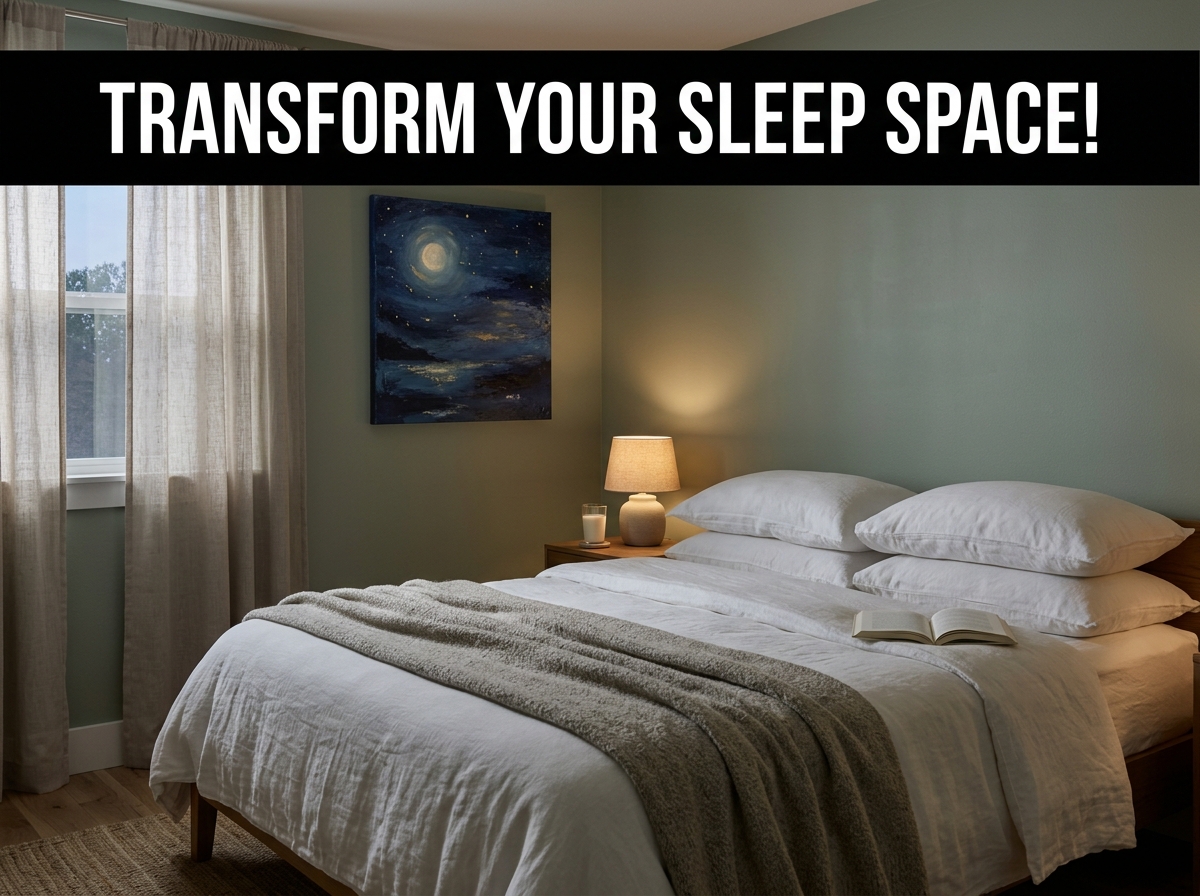
Does your bedroom feel like a sanctuary for rest? Or is it a space that leaves you feeling more tired than when you started the night?
In this blog post, we'll explore how to transform your sleep space into an oasis of tranquility and deep restorative sleep.
How to Create the Perfect Sleep Environment
- Start with a comfortable mattress and pillows that suit your needs.
- Choose soft, breathable bedding that allows you to regulate body temperature during sleep.
- Avoid clutter by keeping bedside tables minimal and only include essentials like a lamp, clock, and reading material for comfort.
The Right Lighting
Opt for soft, warm lighting during the evening to signal your body that it's time to wind down. Avoid bright screens or harsh lights before bedtime as they can disrupt your natural circadian rhythm.
Minimize Distractions
- Eliminate noise by using white noise machines, earplugs, or heavy curtains if necessary.
- Create a quiet environment free of distractions like phones and TV screens in your bedroom.
- Invest in blackout curtains to block out light from windows for undisturbed sleep.
Set the Perfect Temperature
A comfortable room temperature is key. Most people find that a bedroom set between 60-70 degrees Fahrenheit (15-21°C) is ideal for sleep.
- Use a thermostat or fan to maintain this temperature throughout the night.
📚 Explore the Complete Guide
For a comprehensive overview of this topic, see our Sleep Environment & Bedroom Setup hub page — it covers everything you need to know about sleep environment.
Final Thoughts
Remember, transforming your sleep space into an environment conducive to deep restorative sleep takes time and effort. Start by implementing one tip at a time until you find what works for you.
Comments
Komentar
Posting Komentar